
Albany Property Rights Advocates
Stay connected! Submit your email address to sign up with APRA today!
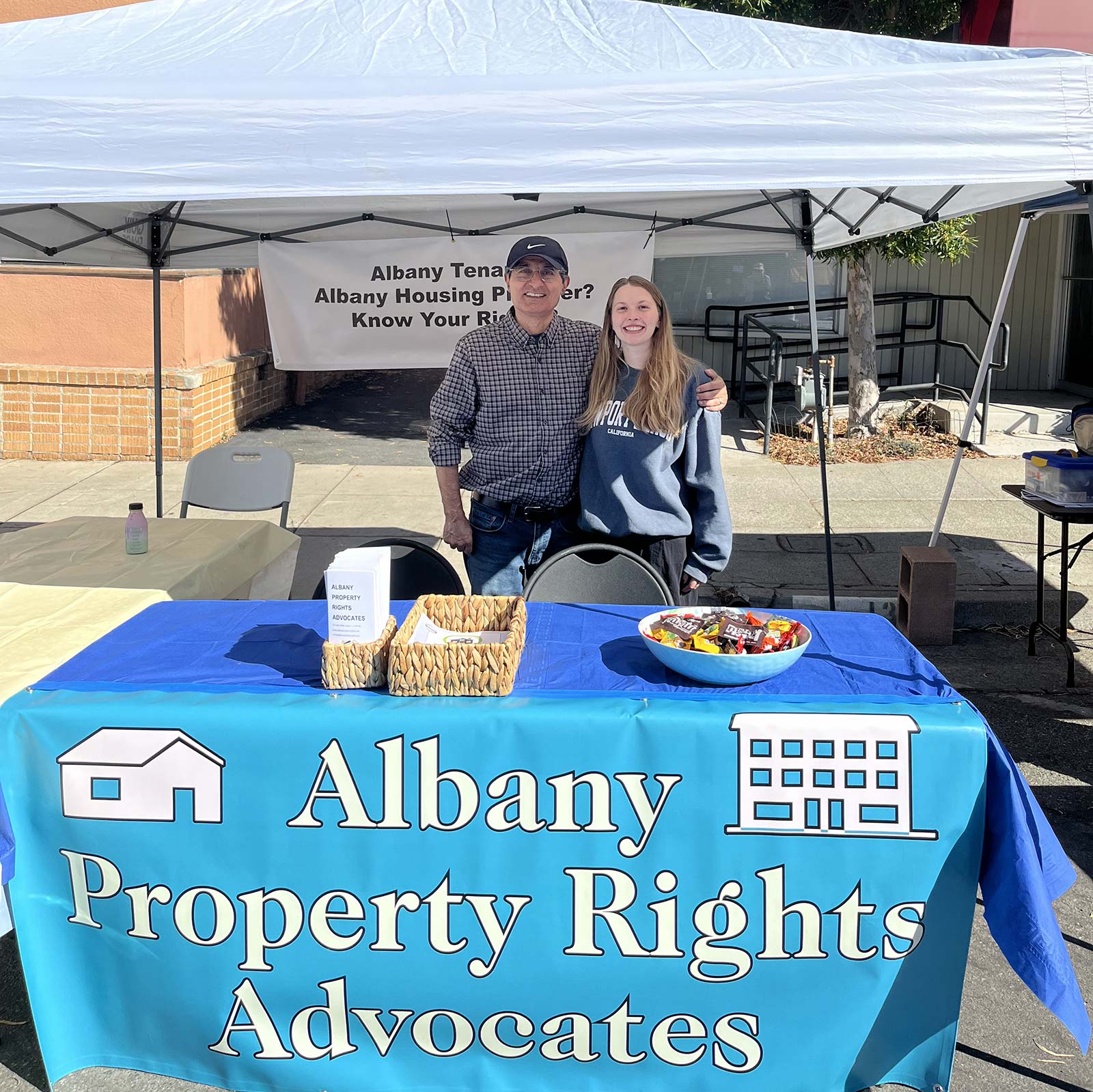
APRA Booth at Solano Stroll – Stop On By & Say “Hi!”
If you’re a housing provider curious about issues affecting your rental property in Albany and would love to meet other Albany rental providers, stop by the Albany Property Rights Advocates (APRA) booth at the Solano Stroll on Sept. 13.
The APRA booth will be open from 9 am to 3 pm and located on Solano Ave., between Key Route Blvd. and Pomona Ave., on the North side of the street.
Learn about a range of topics, including an expansion of Albany laws that are poised to make it more costly for rental providers in the city, especially single-family homes, condos, and ADU rentals.
Come mingle with other Albany rental providers and share your experiences with operating a rental in this city. We’d love to hear from you and meet you!
The APRA Board of Directors
Solano Avenue Association Mixer / Sponsored by APRA
Winkler Real Estate Group / 1215 Solano Avenue
The June 3rd Solano Avenue Association (SAA) mixer is being sponsored by the Albany Property Rights Advocates (APRA) and the Winkler Real Estate Group, which is also graciously hosting the event. This will be a wonderful chance for you to mingle with other Albany housing providers and businesses to share insights on how we can improve our operations amid these challenging times. We hope you can attend this opportunity to meet and greet other rental providers and community leaders.
To ensure we have sufficient food and beverages for the event, please RSVP by May 22 to info@albanypropertyrights.org and include your name and number of attendees.
Thanks, and we look forward to seeing you on June 3rd!
The APRA Board of Directors
12 Important Slides on Unfair Housing Laws
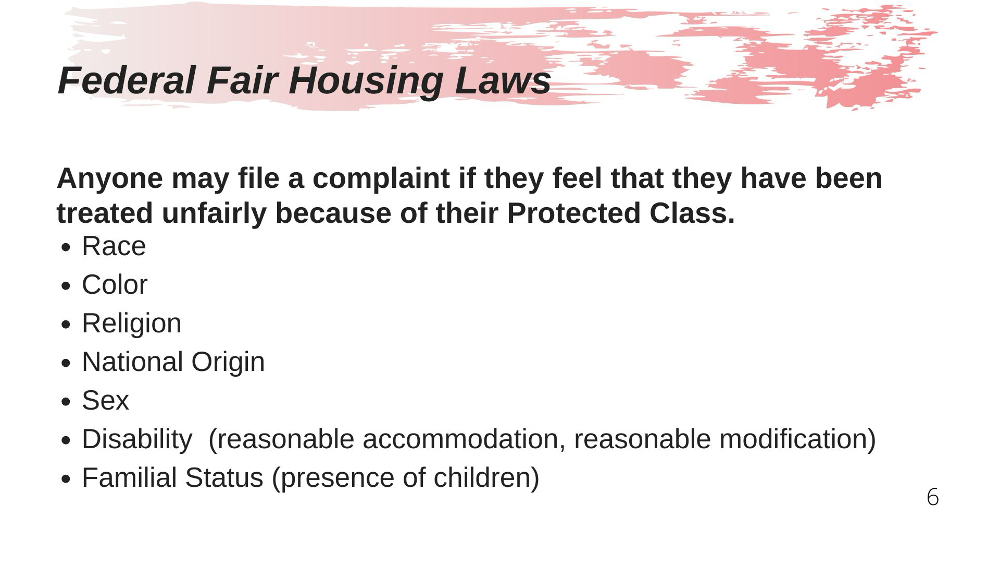
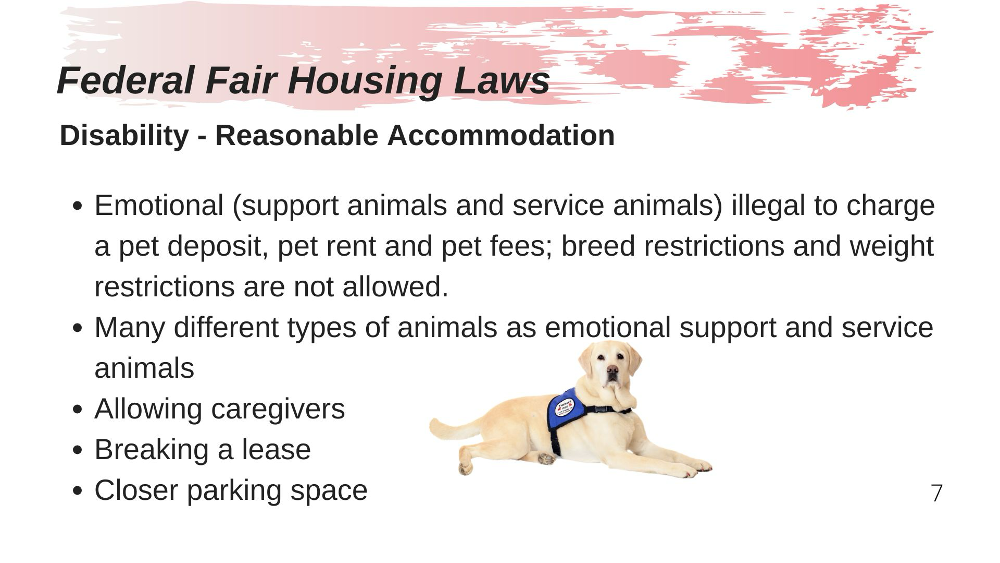
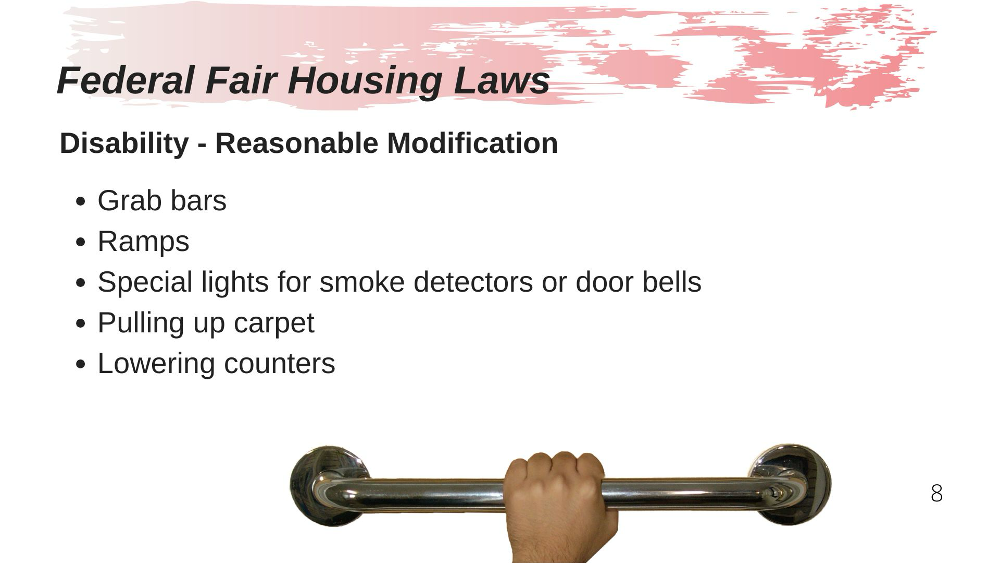
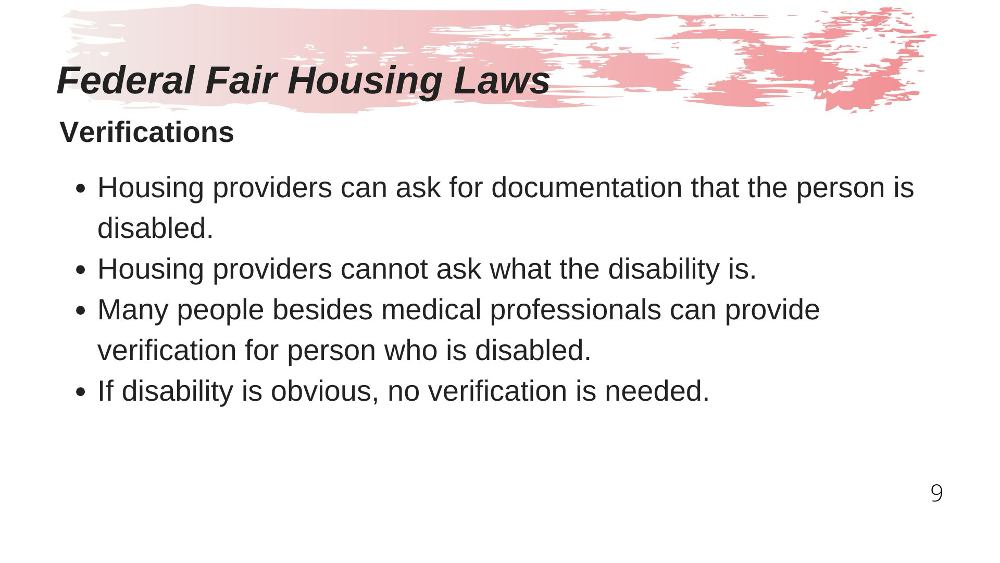
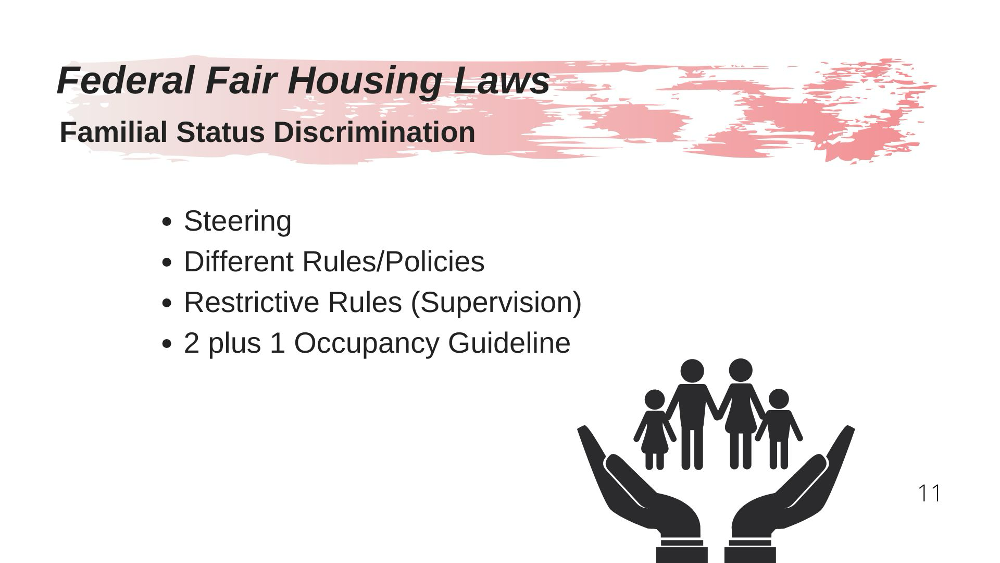
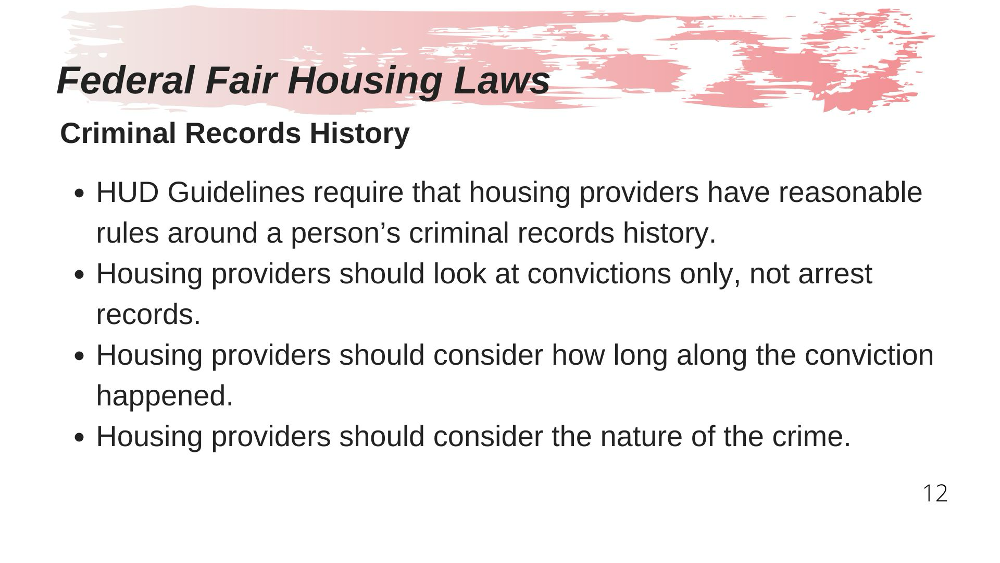
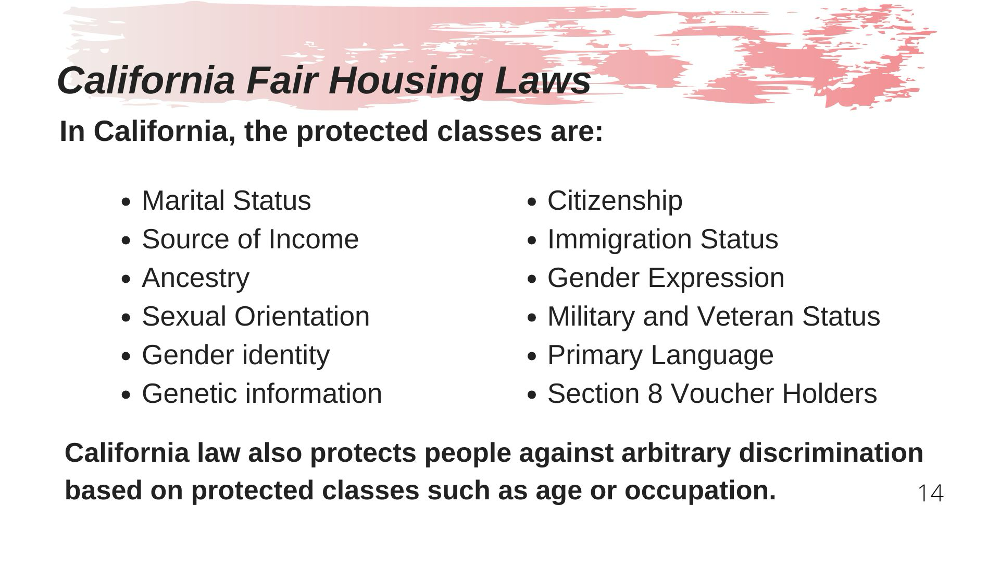
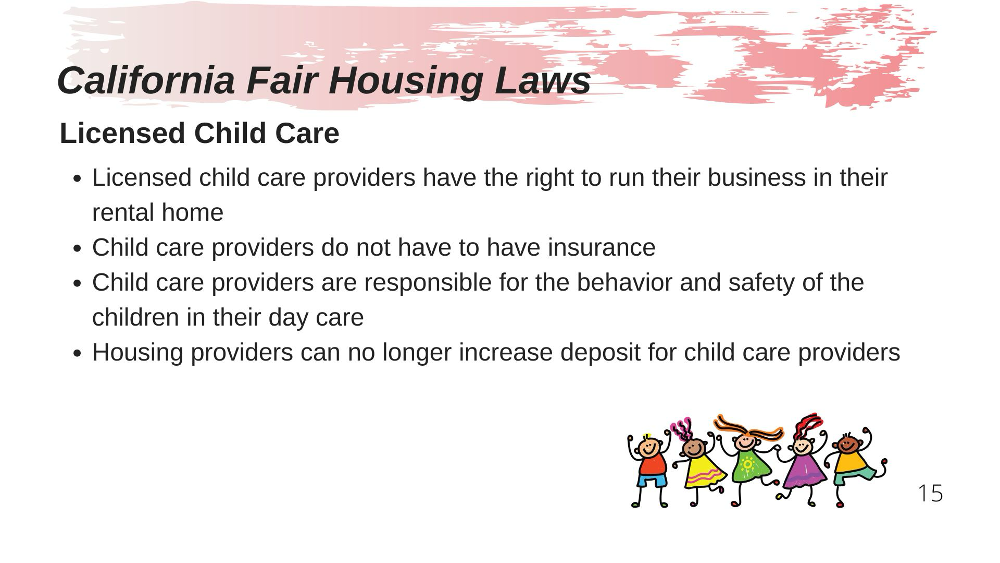
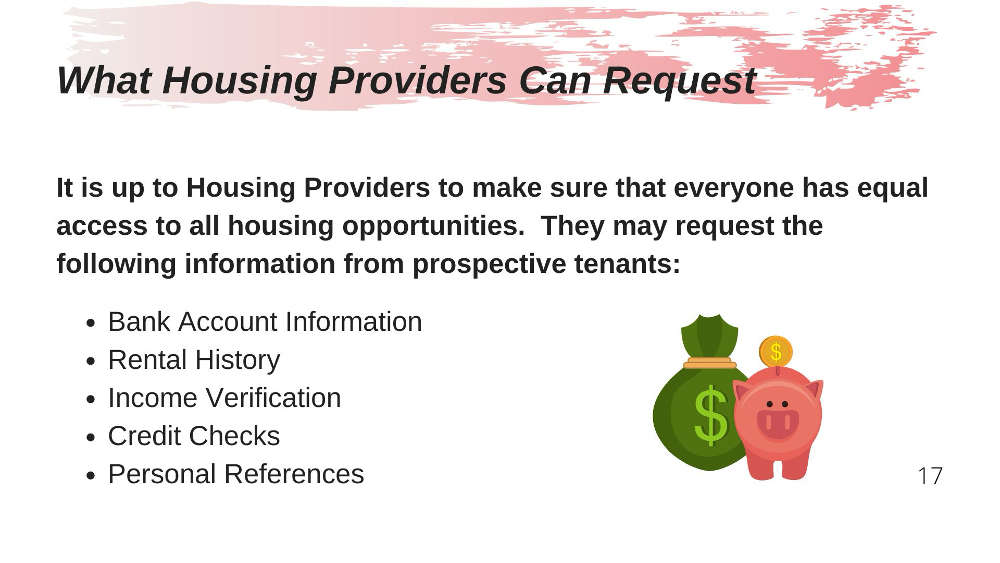
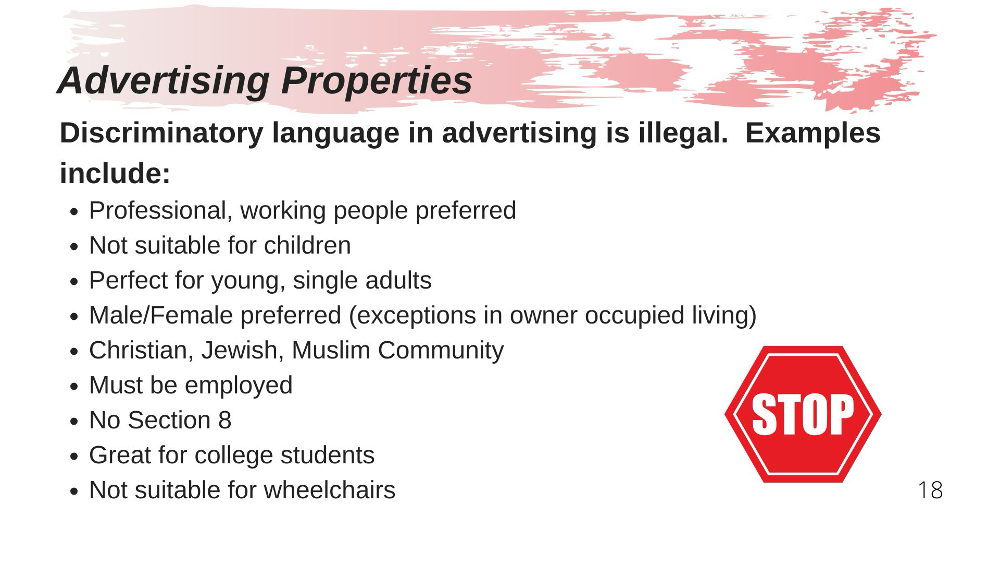
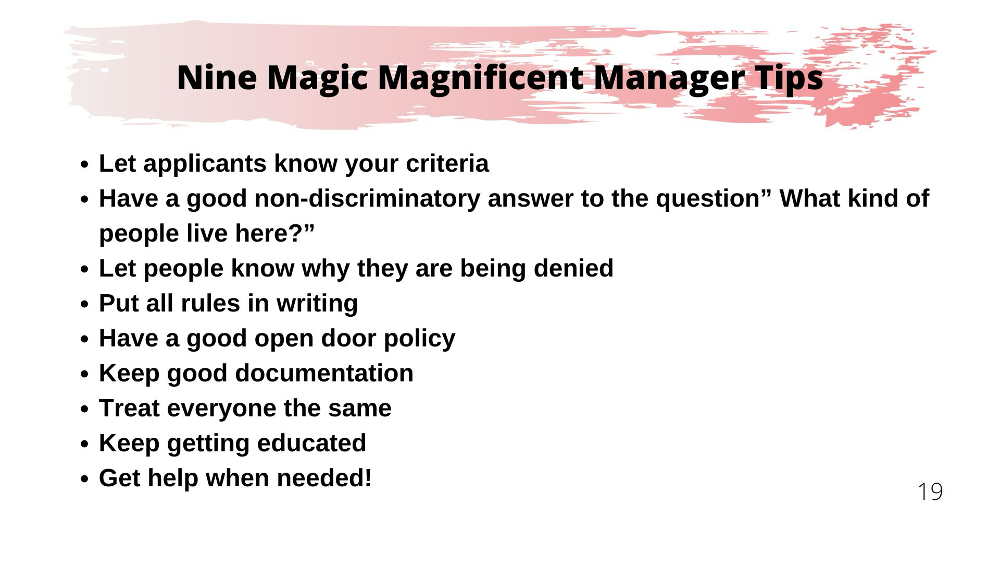
Before you assume you know everything about offering fair and unbiased housing to prospective and current tenants, check your knowledge against these 12 slides provided by ECHO Housing, which runs Albany’s rental review board.
Angie Watson-Hajjem, fair housing coordinator for ECHO and presenter at APRA’s annual meeting in January, held a free fair housing training workshop in March. In this workshop for the public and rental housing providers, she shared these slides and discussed state and federal fair housing laws, as well as who is protected under the law, reasonable accommodations and modifications for tenants with disabilities, renting to families with children, occupancy standards, and advertising guidelines.
For example, she noted that under the California Fair Employment and Housing Act (FEHA), rental housing providers are required to allow tenants to make reasonable modifications to their homes to accommodate their disabilities. However, tenants must make these changes at their own expense, and would need to cover the cost to restore the rental back to its original condition when they move out.
Take a look at these ECHO slides and the wealth of information they provide. It’s worth your time:

How to Avoid Getting Hit With Unfair Housing Tenant Complaints
Do you think you know everything when it comes to offering fair and unbiased housing to prospective and current tenants? Think again, you may be wrong.
ECHO Housing, which runs Albany’s rental review board, will offer a free fair housing training workshop on March 20 from 10 am to 12 pm on Zoom. Here is the link to sign up.
The workshop is open to rental housing providers, tenants, members of the housing industry, and the general public.
Angie Watson-Hajjem, fair housing coordinator for ECHO, will discuss such topics as:
- State and federal fair housing laws
- Who is protected under the law
- Reasonable accommodations and modifications for tenants with disabilities
- Renting to families with children
- Occupancy standards
- Advertising guidelines
Don’t be left in the dark and consider signing up for this informative session. Also of note, Watson-Hajjem was a guest speaker at the Albany Property Rights Advocates (APRA) annual meeting in January.
Albany City Council Takes First Step in Creating Expansive and Costly Tenant Eviction Laws – But Rent Control is Not Pursued for Now
During an Albany City Council meeting on March 2, Albany rental property providers scored a win and a loss in the first inning of the city’s efforts to put local tenant protection measures in place.
The Albany City Council held its first official vote on what it wants its staff to pursue regarding Rent Control, otherwise known as Rent Stabilization, Just Cause for Eviction, and Anti-Harassment and Discrimination protections. The council’s votes on what future steps to take came after receiving a staff report on the city’s current situation regarding these matters and staff recommendations.
Here’s how the meeting panned out, which was attended by approximately 20 people, all of whom spoke out against rent control and just cause eviction measures, except for one person.
RENT STABILIZATION, aka RENT CONTROL
Staff Report and Recommendation:
“Currently available evidence suggests that the majority of Albany landlords do not raise rents to the state maximum, and that many increase rents only infrequently. In light of these trends, the significant staffing, administrative, legal support, and enforcement capacity required for a rent stabilization program is not justified at this time.” [The state of California has a 10% cap on rent increases]
“Staff will continue to provide tenant and landlords education regarding state rent limits and look for ways to incorporate information on state rent limits and the City’s rent review program guidelines into City processes (eg. business license registration and renewal).”
City Council Vote:
None of the City Council members made a motion to vote on moving this topic forward, so for now rent control is not an issue.
Other Related City Council Votes:
City councilman John Miki, who is up for re-election in November, made a motion to have city staff provide more information on various rental registry and rental inspection programs and their costs to set the stage for potential new laws regarding these two issues. Fortunately, all City Council members, except Miki, either voted against the motion or abstained.
However, councilman Preston Jordan made a motion to have city staff gather more information about inspection programs and models for a future discussion by the City Council. That motion, unfortunately, passed.
JUST CAUSE FOR EVICTION – Why You Should Care
Staff Report and Recommendation:
“Due to the low incidence of evictions in the City and the likelihood that the sunset date of the current state just cause for eviction protections will be eliminated or extended, it would be premature to adopt a local eviction ordinance at this time.” [Current sunset date on California’s just cause eviction law is Jan. 1, 2030]
City Council Vote:
City Councilman Preston Jordon made a motion to move forward in having city staff draft up 3 new laws regarding local Just Cause for Eviction, which the City Council will at a future date vote on, one of which EXPANDS the number and type of rental units in Albany that will be subject to Just Cause for Eviction laws.
Proposed Law 1:
Expand just cause requirements to housing types currently exempt under state law, but could be subject to local laws if passed. Here are the rental types at risk of NOW falling under the proposed Albany Just Cause of Eviction laws:
- Detached single-family homes
- Condos and Duplexes, even if the owner resides in one of the duplex units as their primary residence
- Any rental unit constructed within the past 15 years, including ADUs
**Impact of Just Cause of Eviction Laws:
*Example: Landlords are required to pay their tenants the equivalent of 1 month of rent to assist in their move-out costs if they have lived in the unit for 12 months or more and are asked to move out for no-fault of their own.
Proposed Law 2:
Require rental property providers to file a copy of their eviction notice with the City of Albany. [See relationship to proposed law 3]
Proposed Law 3:
Require property owners with rental units in Albany to have an Albany business license, otherwise, they will be prohibited from evicting their tenants.
[FYI, a number of City Council members expressed dismay that approximately 1,000 rental units in the city do not have business licenses and are violating city regulations as a result, and intimated the city is working on resolving this. So, if you don’t have a business license yet, please do so for your own protection.]
***IMPORTANT: All City Council members — with the exception of Albany Mayor Peggy McQuaid (thank you Peggy!) — voted to move these three issues forward to the city staff to draft up ordinances, aka laws. These draft ordinances will come back to the City Council in the coming weeks and months for the City Council to take a final vote on whether they actually want them to become new laws. PLEASE express your opposition to any or all of these three proposed laws BEFORE it goes to a final vote of the City Council by attending City Council meetings in person or on Zoom and by writing your City Council members, whose email addresses can be found the Albany Property Rights Advocates (APRA) on this site.
Additionally, if you know of any Albany rental property providers who would be affected by this potential expansion, please let them know about this!
***Noteworthy: Mayor McQuaid questioned how the city would enforce these laws and the costs, to which councilman Preston said it would just be a law “on the books” for tenants to use but the city would not proactively enforce them. Mayor McQuaid rightly so said “it doesn’t make sense to have a law on the books without plans to enforce it.” Councilman Miki chimed in saying it would be similar to parking ordinances that say people can’t block a driveway with their car and no action is taken unless a complaint is made. To which Mayor McQuaid quipped, “this would be much more complex than that.”
ANTI-HARASSMENT AND DISCRIMINATION PROTECTIONS
Staff Report and Recommendation:
“The City has no evidence indicating widespread or systematic discrimination or harassment is occurring in the City’s rental market.”
“However, the importance of ensuring that tenants and property owners understand their rights and responsibilities under existing state fair housing laws remains. To support this objective, the City can expand education and outreach efforts, an approach broadly supported by HAC [Albany’s Housing Advisory Commission] and members of the public.”
City Council Vote:
Councilman Preston Jordan made a motion to draft an anti-harassment and discrimination protections that would use the Association of Bay Area Governments (ABAG) policy and include the recommendations made by Mayor McQuaid to use the city staff’s recommendations:
- Explicitly protect non-nuclear, non-tradtional, and multi-generational families
- Explicitly prohibit retaliation for specific tenant organizing activities
- Define harassment to include threats related to immigration enforcement
- Expand definitions of harassing conduct to include behaviors such as refusal to accept rent, repeated unlawful entry, or interruption of essential services
- The City Council voted to have city staff draft up a law to include these things that the council will later vote on.
***IMPORTANT: Councilman Preston Jordan’s proposal to use ABAG’s policy, which cites program design, implementation and evaluation considerations points to the Transit-Oriented Communities (TOC) policy requirements. These policies, just like the Just Cause for Eviction enforcement, calls for costly enforcement measures, money that the City of Albany does not have the luxury of spending.
For example, during the Feb. 17 City Council meeting, the council discussed the budget. It noted the Fiscal Year (FY) 2024/25 ended with a $2.1 million deficit due to corrections to cash and equity entries, particularly payroll liabilities.
Currently, the city staff overall expects the City of Albany to meet the balanced budget as adopted. But Albany’s city finance director noted there’s a looming cost on the horizon for this year. Under a ballot measure pushed by councilman Preston Jordon, who said the expected cost would be $18 to $21 per teenage voter if the measure passed, which it did, the city now knows the cost will be approximately $150 per teen voter. This may tip the city’s plans for a balanced budget in 2025/26 into the deficit red.
Albany City Council to Consider Rent Control on March 2
The Albany City Council will begin formal consideration of rent control and costly and restrictive tenant eviction policies at its March 2 city council meeting when it receives recommendations from city staff. [view the agenda here].
The meeting will be held at 7 pm PST at the Albany City Hall council chambers at 1000 San Pablo Ave. in Albany.
It’s critical that all rental providers attend this meeting in person and have your voice heard! This is a crucial meeting because the city council will determine which aspects of rent control, also known as rent stabilization, tenant eviction policies, also known as just cause eviction, and anti-harassment measures it will explore further.
If you can’t attend the city council meeting in person, please attend online via Zoom. https://albanyca.zoom.us/webinar/register/87852424530
Some of the issues the city council may consider include:
Rent Control Laws Under Consideration
- Cap annual rent increases at a lower level than the state of California’s maximum cap of 10%.
- Expand the types of rental units that would be subject to rent control, even though the units are currently exempt under the state of California laws. Duplexes would fall under rent control if the owner doesn’t live in one of the units at the time the other unit is rented and other non-exempt multi-family rental units.
- Prohibit rent increases more than once a year. The state of California allows rent increases twice a year.
Just Cause Eviction Laws Under Consideration
- Imposing stricter and more costly just cause eviction policies than the state of California calls for. For example, Albany may require rental providers to pay tenants one month’s rent or more if they are asked to move out in a no-fault eviction, even if the tenant has lived in the unit for only one to 11 months. In contrast, the state of California requires tenants to live in the unit for at least 12 months or more to receive a no-fault eviction move-out payment of 1 month’s worth of rent.
- Indefinitely extend the state’s Just Cause Eviction laws, even though the state of California currently plans to end them on Jan. 1, 2030.
- Expand the types of rental units that would be subject to Just Cause Eviction laws, which are currently exempt from the state of California laws like detached single-family home rentals, any rental unit built within the past 15 years, and non-profit deed-restricted affordable housing units.
- Require filing eviction notices with the City of Albany
Anti-Harassment and Discrimination Protections Under Consideration
- Expand definitions of harassing conduct to include behaviors like refusal to accept rent, repeated unlawful entry into the unit, and interruption of essential services.
- Explicitly prohibit retaliation for specific tenant organizing activities.
- Explicitly protect non-nuclear, nontraditional, and multi-generational families.
- Define harassment to include threats related to immigration enforcement.
MORE INFORMATION
These five documents provide background information and recommendations to the Albany City Council from city staff and administrators.
- Albany City Staff recommendations and background information
- Rental Units Subject to Just Cause Evictions and Rent Control
- Eviction Trends in Alameda County, including Albany
- Comparison of City of Albany Rent Increases, State Rent Caps, and Property Owner Maintenance and Operations Costs
- Local Tenant Protection Ordinance Implementation Considerations:
Summary of Other Jurisdictions’ Experiences with Administration, Enforcement and Cost Implications
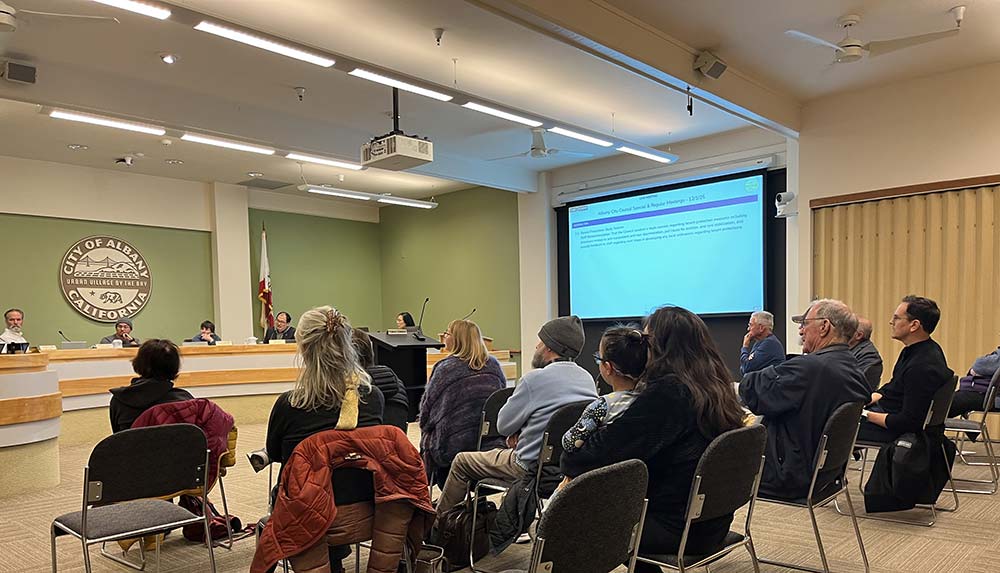
Albany Rental Providers Express Wide-Ranging Concerns Over Rent Control and Costly Tenant Protections at December Albany City Council Meeting
As 2025 came to a close, nearly two dozen Albany rental providers and concerned citizens addressed the Albany City Council on December 1 to express their fears and dismay regarding rent control and costly tenant protection measures that the city’s Housing Advisory Commission (HAC) was recommending that the council consider adopting as new policies and laws.
The purpose of the December meeting was to gather the public’s input on the 16 HAC recommendationsbefore the City Council officially takes up the matter in the New Year. Here’s a link to the city’s video of the December 1 meeting.
This February, or possibly in the coming months, the council is expected to review the HAC’s final report and direct its staff on which of the HAC recommendations on rent control, also known as rent stabilization, and tenant protections it wants to receive more information on in order to eventually vote on the matter. It’s imperative that Albany rental providers and their supporters attend this meeting to help shape which recommendations the council pursues for further study, which ones it drops, and what evidence it relies on in making those decision. Albany rental providers, play a critical role in the early stages of the city council’s decision making and attend this meeting in person or by Zoom!
As the city council receives this rent stabilization (rent control) and tenant protection information from its staff over the following months, it is expected to hash it out over a series of city council meetings before eventually voting on these topics. Albany rental providers, it’s imperative that you attend each and every one of these meetings in person or via Zoom that cover these topics as the council moves to a final vote!
Make a difference! Have your voice heard!
Red Alert! Albany City Council to Consider 16 Costly and Restrictive Rent Control and Tenant Protection Regulations
Albany rental providers brace for a roller coaster ride as the city council considers 16 rent control and tenant protection regulations that can prove more costly and restrictive for the city’s rental housing providers.
The city council in the coming weeks and months is expected to review 16 recommendations from the Albany Housing Advisory Commission (HAC), which focuses on Rent Stabilization Policies, otherwise known as Rent Control; Just Cause for Eviction Policies; and Anti-Harassment & Non-Discrimination Policies.
At the city council meeting, council members are expected to instruct staff to dive deeper into those topics of interest and come back with recommendations in the coming weeks and months.
The council will eventually be voting on some or all of these recommendations, which, if passed, could create new regulations that could cost rental providers tens of thousands of dollars in additional costs, while simultaneously putting a lower cap on their income.
Here are the HAC’s 16 recommendations and three core areas that they fall into, based on the December 1, 2025, staff report to the city council for their review. The information from the report is below:
Anti-Harassment & Non-Discrimination Protections
California law prohibits discrimination by providers of housing based on a broad range of protected characteristics (e.g., race, religion, etc.). During the March 5th, 2025, HAC meeting on anti-harassment and non-discrimination, there was broad support for clear prohibitions against harassment. Although one Commissioner noted that there is not need for additional regulations, during the September 3rd meeting, the majority of HAC members supported the policies below:
- Explicitly protect non-nuclear, nontraditional, and multigenerational families from harassment and discrimination. Non-traditional families would include multigenerational households, blended families, chosen families, unmarried partners, foster or kinship care arrangements, and non-related roommate households functioning as a family unit. State law does not explicitly define or protect non-traditional family arrangements.
- Explicitly prohibit retaliation against renters for engaging in specific tenant organizing activities. State law protects participation in tenant associations but does not detail specific activities, so a local ordinance could explicitly include actions like distributing flyers, holding meetings, posting notices, and using digital communication as protected tenant organizing.
- Define harassment to include any threat to report a renter to immigration authorities and/or any unnecessary demand for proof of U.S. citizenship. State law already prohibits property owners from inquiring about or disclosing a renter’s immigration or citizenship status but does not explicitly classify these activities as harassment.
- Define harassing behaviors to include refusing lawfully offered rent, failing to provide or threatening to withhold required repairs, repeated or excessive entries into a rental unit without proper notice, and interruptions or shutoffs of essential services such as water, heat, or electricity. Not explicitly covered by State law, some local jurisdictions have expanded their ordinances to cover these activities, recognizing them as common tactics that disrupt renters’ quiet enjoyment and may create unsafe living conditions.
Just Cause for Eviction Policies
Feedback during the April 2nd HAC meeting on just cause for eviction included concerns that the eviction process is already difficult and expensive, which may discourage property owners from renting units, and that state protections already exist. Others emphasized the importance of stronger protections against no-fault and retaliatory evictions to maintain fairness and diversity in the City. During the September 3rd, 2025, HAC meeting, the majority of Commissioners, with some variation, supported the following policies, though concern was expressed that owners may remove units from the rental market if regulations become too onerous:
- Eliminate sunset date for California Just Cause for Eviction protections. Currently, the just- cause eviction protections provided for in AB 1482/SB 567 are set to sunset January 1, 2030.
- Lessen or remove minimum tenancy requirement. State law currently protects renters only after 12 months of tenancy.
- Include units exempt under AB 1482 (single-family homes, newly constructed housing, etc.) in just cause requirements. A local jurisdiction can broaden just-cause protections to unit types currently exempted from State law protections, including single-family homes, duplexes where the owner lives in one of the units, and housing constructed in the last 15 years (a rolling exemption).
- Require property owners to file eviction notices with a designated City department. In addition, make failure to file such notices a defense in eviction cases. This was discussed as a low-burden requirement that would provide metrics on the instances of eviction in the City.
- Require owners to maintain a valid business license and unit registration as a condition for pursuing an eviction. Failure to comply would provide tenants with a valid defense in eviction proceedings.
- Increase relocation assistance for no-fault evictions. State law currently requires one month’s relocation assistance.
Rent Stabilization Policies (RENT CONTROL)
Lengthy discussions occurred during the May 7th HAC meeting on rent stabilization focused on rising rents outpacing incomes, with calls for limits beyond state law. Others mentioned the increased costs to property owners, particularly related to insurance, how rent stabilization may restrict rental supply, how regulations would be enforced, and questioned whether a local rent stabilization program is needed in Albany, considering state limits. Local rent stabilization measures would only apply to units eligible under the Cost-Hawkins Rental Housing Act, primarily older multifamily properties built before 1995, while single-family homes, condos, and newer construction would remain exempt under state law. At the September 3rd, 2025, HAC meeting, the Commissioners generally agreed with the following policies, with one Commissioner only agreeing if means testing accompanied rent stabilization:
- Eliminate sunset date for California rent stabilization provisions. Currently the rent stabilization limits provided for in AB 1482/SB 567 are set to sunset January 1, 2030.
- Cap annual rent increases below the state limit. State law currently caps rent increases on non-exempt units to the lesser of 5% of the current rent plus the regional Consumer Price Index (CPI), or 10%, in any 12-month period. The City could set an alternative limit such as a flat percentage, the regional CPI, or a combination of the two. To comply with constitutional requirements, the City would also establish a process for property owners to petition for higher increases based on a fair rate of return.
- Expand rent stabilization coverage to units not included in AB 1482/SB 567 but legally eligible by state law. This could include duplexes where the owner does not occupy a unit at the beginning of tenancy.
- Limit rent increases to once a year. State law currently allows an owner to raise rent twice in 12 months provided the total increase does not exceed the annual limit.
- Prohibit rent increase in first year of tenancy. Allow rent increases only after 12 months of tenancy
- Invalidate any rent increase on the property that is not licensed and registered. A property owner’s failure to obtain a business license or register their unit could be used as a valid tenant defense to an eviction for nonpayment of increased rent. A local registration requirement to validate rent increases could apply to all rental units, including those exempt from rent stabilization laws.
Summary of the 1/20/26 Albany City Council meeting discussions relevant to housing providers and interest in rent control
The Albany City Council meeting on January 20, 2026, was primarily focused on administrative updates, hazard mitigation planning, and climate initiatives. While “rent control” was not a formal agenda item, the meeting touched on several issues that directly impact the relationship between the city, tenants, and housing providers—most notably regarding mandatory building upgrades and the push for electrification.
Mandatory Retrofits and Regulatory Pressure A significant portion of the meeting involved the Local Hazard Mitigation Plan (LHMP) [32:00 ]. During the discussion, Council Member Jordan explicitly suggested extending the mandatory seismic retrofit ordinance to include duplexes and single-family residences that are rented [45:44 ]. He framed this as a “business proposition,” arguing that because these properties are income-generating, they should be held to higher safety standards regardless of the owner’s financial bandwidth. This indicates a policy direction where rental properties are singled out for mandatory capital improvements.
Electrification and EV Charging Mandates Public comment and council discussion highlighted a growing push for housing providers to provide EV charging infrastructure. A representative for a tenant shared a statement regarding the “stress” of charging an EV while renting, noting that their housing provider was “not interested” in installing a charger [27:34 ]. The commenter urged the city to “encourage” or require apartment owners to install these units [29:00 ]. Additionally, there was a proposal to explore an ordinance similar to Berkeley’s BESO (Building Emissions Saving Ordinance), which would require energy efficiency upgrades at the time of sale [01:03:02 ].
Instances of Potential Bias Against Housing Providers The meeting reflected a recurring theme where rental housing is viewed as a commercial entity rather than a provider of a community service.
- Selective Enforcement: Council Member Jordan’s suggestion to mandate seismic retrofits specifically for rented single-family homes—but not necessarily owner-occupied ones—creates a double standard that targets housing providers for additional costs [45:51 ].
- Externalizing Costs: Discussions regarding EV charging and electrification often focused on tenant “stress” or “rights” without addressing the logistical or financial hurdles housing providers face, such as outdated electrical panels or the high cost of installation in older buildings [27:50 ].
Financial Resource for Your Albany Tenant When They Fall Behind on Rent
When your Albany tenant is struggling to pay rent, point them to the city’s community services department to see if they qualify for financial assistance.
Income-eligible Albany tenants who have fallen behind on their rent or are at risk of becoming delinquent may be able to secure one-time assistance through the city under this program. Click for more information on this program.
They can also contact Kate Miller, recreation and community services supervisor, to learn more about the program and start the application process. She can be reached at: (510) 559-7227 / kmiller@albanyca.org
Talking Points for Your Advocacy Against Rent Control
You can use these specific points, derived from the meeting’s context, to advocate against further restrictive housing policies in Albany:
- The Burden of Competing Mandates:
- “The council is currently discussing expanding mandatory seismic retrofits [45:44 ] and pushing for expensive electrification and EV charging mandates [29:00 ]. When you layer rent control on top of these capital-intensive requirements, you make it financially impossible for small providers to maintain their buildings. We cannot demand ‘top-tier’ infrastructure while simultaneously capping the income needed to pay for it.”
- Targeting Small Housing Providers:
- “There is a growing sentiment in this chamber that rental properties should be treated differently than owner-occupied homes regarding safety mandates [45:51 ]. Singling out rental housing for additional costs—while also restricting rents—will inevitably lead to ‘mom-and-pop’ housing providers exiting the market, leaving only large corporate entities or causing a net loss in available housing units.”
- The “Unfunded Mandate” Problem:
- “Public commenters are asking the city to ‘encourage’ or require housing providers to install EV chargers [29:00 ], despite the ‘thousands of dollars’ in logistical challenges acknowledged by the tenants themselves [27:50 ]. If the city intends to move forward with rent caps, it must also provide full subsidies for these mandated upgrades, rather than expecting housing providers to absorb the costs of the city’s climate goals.”
- Preserving Housing Quality:
- “The Local Hazard Mitigation Plan highlights the importance of building resilience [32:16 ]. However, rent control is historically proven to disincentivize the very maintenance and upgrades—like seismic retrofitting and green infrastructure—that the council says it wants to prioritize. We should be incentivizing safety, not penalizing the providers.”
Video Reference: Albany City Council – Jan. 20, 2026